Zack Wilson recently put up this great little video about William Tyler, featuring music from Tyler’s recent album Behold The Spirit. Wilson directed and filmed, and Tyler narrates the video.
William Tyler “Behold The Spirit” Video
1 Reply
Zack Wilson recently put up this great little video about William Tyler, featuring music from Tyler’s recent album Behold The Spirit. Wilson directed and filmed, and Tyler narrates the video.
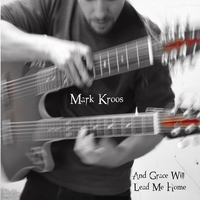 Last November I happened to be scanning a community newspaper and saw a picture of a young guy playing an Ovation doubleneck. His name was Mark Kroos and he was doing a gig at a local church. The article called him “one of the only touring doubleneck guitarists in the world.” It referred to his “incredible tapping technique,” and mentioned influences such as Michael Hedges and Andy McKee. Well, that was sufficiently intriguing for me. Long story short, Kroos’s playing was impressive. But the Minneapolis church’s thin-sounding PA system didn’t—I suspected—nearly do him justice. Getting acquainted with his debut album And Grace Will Lead Me Home confirmed that.
There are, of course, masters who’ve taken the tapping approach to exalted levels—names like Emmett Chapman (of Chapman Stick fame), Hedges, Stanley Jordan, Eddie Van Halen. And purely from the perspective of hammer-on/pull-off virtuosity, Kroos—trained as a jazz guitarist, with three years in a touring ska/punk band—definitely knows a thing or two. With two six-string necks (the Ovation’s upper 12-string neck is strung and played as a six-string) going simultaneously, he creates a magnificent sound. Think sheets, waves, cascades of steel-string goodness—with shimmering treble lines and rumbling bass. Kroos’s two-fisted playing perhaps has more in common with the piano than the guitar— really and truly lap piano. Kroos also plays singleneck on a few items, to similar effect, and some of his tunings include Open D, DGDGAD and DADGAD. Continue reading
Late last year, we reviewed William Tyler’s excellent Tompkins Square debut Behold The Spirit. I recently caught up with William to talk about the making of the record, how he got into guitar, and his upcoming tour with Michael Chapman.
W&W : Talk a little about how you got started in guitar… how long have you been playing, what got you started, and your early influences.
Well I had the benefit/burden of growing up in Nashville, both around a lot of older musicians and a musical family. My father is a country songwriter and he was drawn to Nashville in the mid seventies, back when country singers bragged about smoking pot and reading books, as opposed to now when it’s all about trucks and patriotism.
I started playing guitar when I was a teenager, in spurts at first because I was more interested in drums and piano. I was also somewhat of a late bloomer when it came to rock music; I didn’t start buying rock records until I was fourteen or fifteen. Early stuff that influenced me was REM and Peter Buck, especially all the cross picking he did, the country style stuff in Rockpile and Dave Edmunds, and then stuff like the Sex Pistols and Ramones. I think Physical Graffiti was the first record I heard where I wanted to pick out an open tuning. Continue reading
David Leicht and Raymond Morin, both contributors to Work & Worry, have created a new video for the song “Capitano”, from their 2010 CD/Tab book release Petrifidelity. The clips were filmed at Morin’s home and at the world-famous Sharp Edge beer dispensary. Check it out below!
There are still a small handful of Petrifidelity books available. Visit here for more info!
A little while back, I received a very interesting package from my friend Patrick Borezo, an artist, musician and show promoter from Western Massachusetts. It contained a small, beautiful paperback book called Nonmusical Patterns and their Musical Uses, written by Chris Weisman, a guitarist who has recorded extensively for Greg Davis’ Autumn Records, and is also a member of Happy Birthday (Sub Pop Records). Patrick and his wife Amy printed and assembled the books, and are releasing it on their own Radical Readout Press.
It’s an interesting idea, to be sure… a collection of non-conventional scale patterns, chosen on their visual rather than their musical merits. I conducted the following email interview with Chris, to find out more about the project.
W&W : What inspired you to write the book?
In 2003, I started noticing more visual stuff happening on the fretboard, mostly when I was playing changes, playing over standards. Me and my buddy Bryan Bergeron-Killough (also a guitarist) used to have these long sessions every night when we both lived in Portland, Maine. I started getting interested in “scales” that would work visually (like the pattern is complete and strictly in the visual realm of dots on a grid, you don’t need to know anything about music at all to see them) but also be musically somewhat conservative in terms of pitch collections; the pitches in Nonmusical Patterns are the same as in conventional scales (or close) but due to this visual compass that’s also being respected, there are leaps all over the place. And the 2 octaves that fit roughly in a guitar position are different, usually when you play a scale it’s the same notes in every octave (and the scales don’t really look like anything). All this stuff is in the introduction. I started the book in the spring of ’05 and finished it 2 years later. Continue reading
 WORK & WORRY