Category Archives: Reviews

Review : Hunter Van Larkins “Myriad” CD (CandyRat Records, 2010)

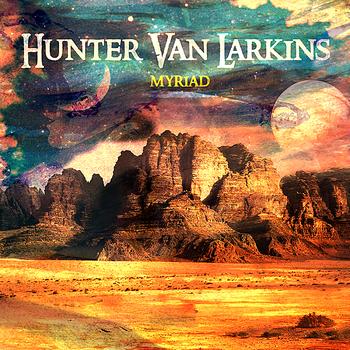
Hunter_Van_MyriadHere on Work & Worry, we cover a lot of what could be considered traditional or neo-traditional acoustic guitar playing, usually rooted in blues and folk forms. Melodic ideas are often stated (or implied) with the high strings, and this is typically laid over a foundation of droning or alternating-bass… the beloved “boom-chick”. This is one, but certainly not the only approach to fingerstyle, and these days, the number of players who eschew traditional picking and employ extended techniques – right-hand tapping, artificial harmonics and playing the guitar’s body percussively – is ever-growing. CandyRat Records is home to many such modern-sounding players, several of whom also happen to be YouTube sensations (Andy McKee’s “Drifting” has more than 34 million views, as of this writing). It’s not surprising, since many of the aforementioned techniques, especially when played with speed, can be visually exciting. For all these reasons and more, this style, pioneered by players like Michael Hedges in the early 80’s, is riding a fresh wave of popularity.

Hunter Van Larkins is the duo of Ross Hunter and Owen Van Larkins, and their new album Myriad is one of the latest releases on the CandyRat label. It’s a completely instrumental affair, both players performing on steel-stringed acoustic guitars, with occasional help from a third guitar or cello. The overall sound of the record is contemporary, with ample amounts of reverb and electric pickup mixed in with the acoustic tones. The playing possesses some of CandyRat calling cards : the high-energy slapping and tapping on closer “Breakthrough” and the aptly titled “Tapestry” are a couple of obvious examples, and the entire record finds both Hunter and Van Larkins (literally) banging out percussive, groove-oriented parts… but Myriad is less about technique and more about composition and texture. Continue reading

Review / Interview : Eric Carbonara “The Paradise Abyss” LP (Nada Sound Studio, 2010)

Carbo_ParadisePhiladelphia based guitarist Eric Carbonara achieves a rare state of beauty with his third full length release, The Paradise Abyss. With his 34 year-old handmade spruce and cypress flamenco guitar, Carbonara has created an album where technique and feel harmonize perfectly with composition. Listening to this record gave me the kind of feeling I usually only get from instrumental records from the finest gypsy flamenco players… or say, from the music of Ornette Coleman! This is the kind of feeling that transcends time and reveals the true spirit of it’s inspired maker. The Spanish call this Duende, and when listening to The Paradise Abyss, I could feel it’s presence!

The album begins with the composition “Abortion of Autumn”, a piece elegantly expressed through the use of flamenco and classical techniques, Carbonara’s skilled use of tonal colours conjuring a scene of natural warmth and beauty. On “Draw Me Out From My True Self”, aggressive rasquedo technique gives way to another gorgeous melodic progression. “Dawn Never Dusk” begins with a slightly dark melody that exudes a deep, contemplative feeling, which eventually flows into a cascading waterfall of plucked notes, shifting to blissful calm before ending in a light dance. Both “Gaggle to Jolly” and “Dance of the Sinister Nymph” are driving, spirited pieces, full of Andalusian dynamics and colour. “Charles Smokes a Cigarette” lands squarely in Davy Graham territory with it’s moody jazz-blues feel. The record finishes with the composition “Infinite Breath of Lady Greenland”, a simply stated, picturesque folk melody that reveals infinite intent with circular picking patterns that seem to dance into the heavens.

To get more insight about this album, I interviewed Eric during the month of November.

W&W : How would you describe the evolution of your playing and composition as it relates to The Paradise Abyss?

The Paradise Abyss is much more composed than [previous album]Exodus Bulldornadius… there’s still a good bit of improvised bits throughout Paradise, but during the writing of this album, I was much more aware of what I was doing, that I was writing autobiographical narratives… that I was telling a story, with every note being a word.  Exodus felt way more cathartic as just raw expression, while Paradise feels more like i was thinking before speaking.  During Paradise, I often felt conflicted when a composition started to become something that wasn’t in harmony with the truth of what the story was about… I was even a little worried that I would start to make life decisions based on a subconscious desire to have the songs sound sadder and more evil! Continue reading

Review : William Tyler “Behold The Spirit” LP/CD (Tompkins Square, 2010)

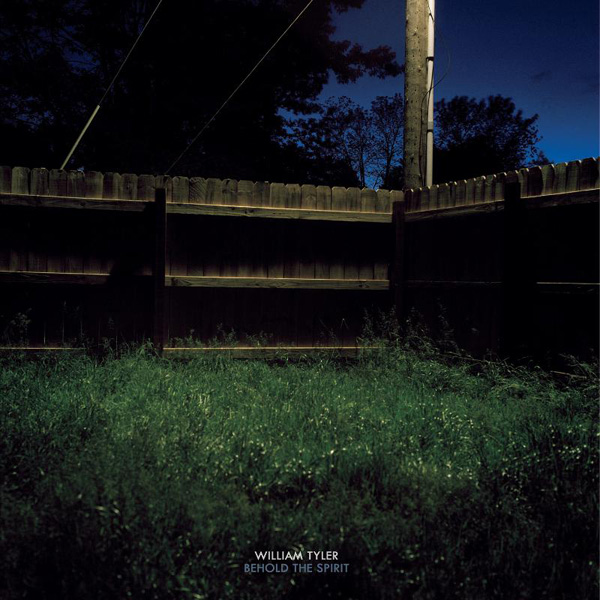
william-tyler-behold-the-spiritWilliam Tyler has played on his fair share of notable indie albums.  You may have heard him on recordings by Lambchop, The Silver Jews, or as his own solo nom de plum, Paper Hats.  Behold The Spirit is not only Tyler’s first release under his given name, but is also his debut full-length for Tompkins Square, and probably one of the finest acoustic guitar records in that label’s catalog… for even though Tyler does his part to carry the American Primitive flag for the always Takoma-leaning NYC label, the Nashville-based guitarist is no mere copyist… his fresh sounding arrangements and confident, variegated technique prove him to be an intriguing picker in his own right.

I’ll dispense with some minor criticisms early: the “experimental” passages?  This has become something of a cliche at this point, hasn’t it?  It seems that no guitarist under the age of 40 can release an LP that doesn’t contain these sorts of generally indulgent, faceless interludes, and Tyler’s are no more or less interesting than most.  From a strategic perspective, I can see the logic in having a tangible connection to the thriving drone scene, as it can add considerably to one’s audience, and provide crucial performance and touring opportunities (see James Blackshaw’s recent US jaunt with Mountains)… and after all, more than a few of today’s finest young acoustic pickers have evolved out of exactly that scene… it’s just that on an otherwise compelling guitar record like Behold The Spirit, hazy, meandering tracks like “To The Finland Station” and “Signal Mountain” feel like little more than filler.

My other (intermittent) quibble with the record is the insistently ambient, room-mic’d production style, or rather, the fact that it occasionally swallows up the details in Tyler’s accomplished and nuanced playing.   Third track “Oashpe” begins with some very pretty chord changes, and these are definitely enriched by the dreamy sound… but when the guitar playing gains momentum in the pattern-picking section, it gets washed out by the ethereal production, resulting in the track feeling less urgent and less dynamic.  This isn’t always the case, though, and the imposed atmosphere is a nice setting for several of the tunes:  it adds some sonic distinction to a Fahey-esque composition like “Missionary Ridge”, which has Tyler searching, like so many before him, for that perfect front porch melody.  Do echo chambers even have a front porch?  Kidding! Continue reading

Review : Pierre Bensusan “Vividly” CD (DADGAD Music, 2010)

vividly_cover_sitePierre Bensusan is a true master guitarist, and one who has worn many hats over the years. Early records like his Grand Prix du Disque for Folk Music-winning debut, Pres De Paris, and it’s immediate follow-ups, 2 and Musiques, found their inspiration in the traditional music of the British Isles, and some of Bensusan’s arrangements of Irish melodies have become ubiquitous and beloved in the fingerstyle guitar repertoire.

As the 70’s gave way to the 80’s, the French-Algerian phenom embraced modern performance and recording technology, with reverb, looping, and sometimes even distortion finding their way into his increasingly non-traditional compositions. As time went on, the effects units were shelved… Bensusan once again wanted the voice of his unadorned acoustic guitar (often a cedar-topped Lowden, dubbed “The Old Lady”) to do the talking.

The new studio album Vividly, like his last few records, finds Bensusan exploring world music and jazz textures, with harmonic and rhythmic ideas that are often very sophisticated. Continue reading

Review : Duck Baker “The King Of Bongo Bong” CD (Stefan Grossman’s Guitar Workshop, 2010)

bongo_500Duck Baker has been a figure in the acoustic guitar scene since the 1970’s and The King of Bongo Bong, his third record on the Kicking Mule label, highlights his interest in swing, blues and folk guitar. Duck would, later in his career, delve as deeply into Celtic and other traditional styles as he does into 20’s-era swing guitar on this recording. The four-to-the-bar style is prominent on a number of these tracks, and as usual with Duck Baker, a nylon-string guitar is played throughout the album. Duck mixes his playing with both strummed-chord comping on the more upbeat numbers and fingerstyle on the more intricate tunes, oftentimes blending the two picking styles.

The album kicks off with “New Righteous Blues”, a Baker/Stefan Grossman duet which oddly introduces Duck’s playing as accompaniment to Grossman’s soloing over the track. Though some of Stefan’s lead lines are tasteful, his pentatonic leads packed with skillful string-bends, this ever-present soloing seems overpowering in its presence throughout the track. Duck’s admirably honest voice doesn’t quite command one’ s attention enough to make this a strong vocal piece, either, which makes it a diffused rag-blues workout. Blind Blake’s 1930 recording of this song is far more compelling in its buoyant rhythm and highly syncopated style, and Blake’s original falsetto on the answering lines is missed in this updated version. “Deep River” features another prominent lead guitar contribution by Grossman, who also produced this album. Continue reading