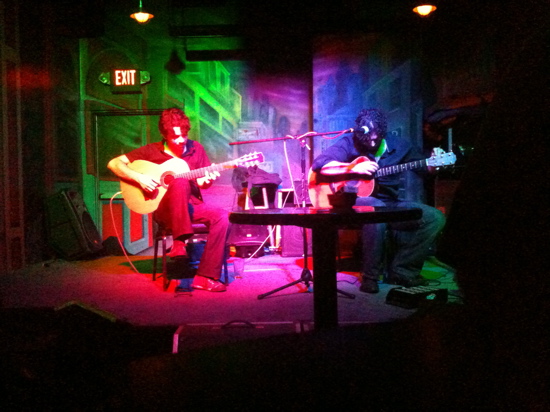
 Philadelphia based guitarist Eric Carbonara achieves a rare state of beauty with his third full length release, The Paradise Abyss. With his 34 year-old handmade spruce and cypress flamenco guitar, Carbonara has created an album where technique and feel harmonize perfectly with composition. Listening to this record gave me the kind of feeling I usually only get from instrumental records from the finest gypsy flamenco players… or say, from the music of Ornette Coleman! This is the kind of feeling that transcends time and reveals the true spirit of it’s inspired maker. The Spanish call this Duende, and when listening to The Paradise Abyss, I could feel it’s presence!
The album begins with the composition “Abortion of Autumn”, a piece elegantly expressed through the use of flamenco and classical techniques, Carbonara’s skilled use of tonal colours conjuring a scene of natural warmth and beauty. On “Draw Me Out From My True Self”, aggressive rasquedo technique gives way to another gorgeous melodic progression. “Dawn Never Dusk” begins with a slightly dark melody that exudes a deep, contemplative feeling, which eventually flows into a cascading waterfall of plucked notes, shifting to blissful calm before ending in a light dance. Both “Gaggle to Jolly” and “Dance of the Sinister Nymph” are driving, spirited pieces, full of Andalusian dynamics and colour. “Charles Smokes a Cigarette” lands squarely in Davy Graham territory with it’s moody jazz-blues feel. The record finishes with the composition “Infinite Breath of Lady Greenland”, a simply stated, picturesque folk melody that reveals infinite intent with circular picking patterns that seem to dance into the heavens.
To get more insight about this album, I interviewed Eric during the month of November.
W&W : How would you describe the evolution of your playing and composition as it relates to The Paradise Abyss?
The Paradise Abyss is much more composed than [previous album]Exodus Bulldornadius… there’s still a good bit of improvised bits throughout Paradise, but during the writing of this album, I was much more aware of what I was doing, that I was writing autobiographical narratives… that I was telling a story, with every note being a word. Exodus felt way more cathartic as just raw expression, while Paradise feels more like i was thinking before speaking. During Paradise, I often felt conflicted when a composition started to become something that wasn’t in harmony with the truth of what the story was about… I was even a little worried that I would start to make life decisions based on a subconscious desire to have the songs sound sadder and more evil! Continue reading


 WORK & WORRY