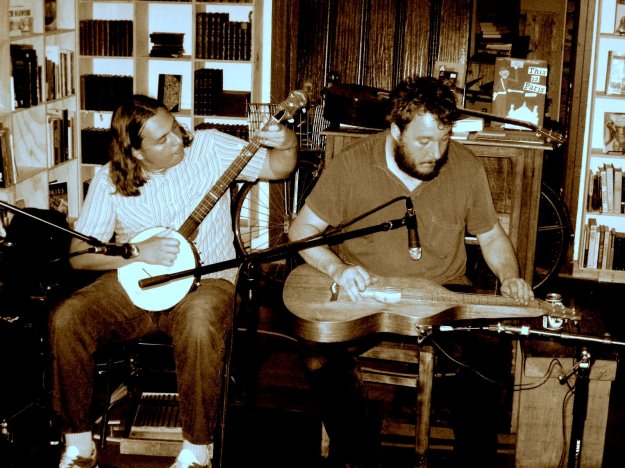
Please follow this link to see Dan Cohoon’s pictures of the late Jack Rose.
Please follow this link to see Dan Cohoon’s pictures of the late Jack Rose.

Israeli guitarist Yair Yona
The primary touchstone for Yona’s music is the Takoma school and the American Primitive revival movement, and it’s easy to hear the influence of John Fahey, Jack Rose, Leo Kottke and Glenn Jones. Jones is, in fact, a big fan of Yair and Remember, and had this to say :
Yair is fantastic… that album is one of my favorite guitar records of the year. Production-wise, it’s very ambitious, and quite smart, and in terms of both composition and technique, there are two or three tracks that I think are as good as anything ever done on the guitar. Obviously his album wouldn’t exist without his influences… but it rises above being merely derivative into something beautiful and, occasionally, even sublime.
As a nod to Yona’s drone and indie rock influences, there are also splashes of synth and assorted ambient effects on some of Remember’s tracks, though these are mostly relegated to background atmosphere… for the most part, Yona keeps his guitar playing as the focus of his compositions.
Yair Yona – “Remember”
I decided to get in touch with Yona and conducted the following interview. Worth noting : the entire Remember album is available as a free digital download on Yona’s Bandcamp page.
W&W : How old are you, and how long have you been playing the guitar?
Yair : I’m 28, been playing [music] for 13 years. Most of that time I played bass, until the winter of 2003, when I grabbed an acoustic guitar and started a whole new journey.
W&W : Take us through the evolution of your playing… when did you start working with acoustic instruments? Was it something you moved toward after the discovery of your European and American folk and guitar influences? Did you learn your fingerstyle techniques from emulating recordings, did you use TAB, etc?
Yair : Well, I was playing bass for couple of years, and was really into psychedelic rock and prog. In 2002, I moved to London and a couple of months afterward, I heard the first Bert Jansch album, which totally changed my life and made me realize that I’m much more into that now. His technique was so breathtaking, I almost lost the will to play. But at some point, I managed to learn one simple tune of his, which gave me the strength to move on and learn more tunes and practice. At first, I had to use TABs, as my hearing was rusty and I couldn’t figure out how the guy combined the two elements of bass string playing along with a melody and rhythm. The guy is a genius. No one plays like him, and I wish he’d be my neighbor. I’ll trade glasses of sugar and milk for 15 years, for one guitar lesson from him..
W&W : Which Bert song was the first that you learned to play? When I first started playing fingerstyle, I taught myself “Runnin, Runnin From Home” from the album, but ended up with a completely convoluted fingering that made it way more difficult to play than it had to be! A friend later found a TAB online and set me straight!
Yair : We share the exact same story! I figured “Running…” was the more “easy” song on the album, so I started with it. I had no idea about alternate bass, so I made up some terrible chord positions to try and understand how to play that. Only later I found a TAB for it and realized how it should be played. When I managed to play “Angie” for the first time, it was the happiest day of my life! (More on the day I first heard Bert’s album can be found here) One of my favorite tunes of his is maybe his easiest – “Bright New Year”. But the all time favorite song for me is “Fresh as a Sweet Sunday Morning”…
W&W : Please describe the instruments you used on Remember.
Yair : Well, in terms of my guitars, there were only three. The 6-string is an EN guitar, which a friend of mine built me as a practice for the guitar workshop lessons that he took. The EN was built based on a Martin 000 model. The 12-string was a Fender, which I sold to buy a brilliant Larrivée. The Weissenborn was actually a simple Vineyard guitar, and right after I finished the recordings, I bought a Goldtone. Still have the Vineyard, such a wonderful guitar, especially for its price. The Royal resonator is a cheap resonator I bought to see how I’m doing with this type of guitar.
W&W : You replaced your 12-string with a Larrivée 12? What body style, model number?
Yair : The Larrivée is a new LR-03-12.
W&W : Does Israel have its own instrument manufacturers, any popular regional guitar makers? Are the popular US brands like Martin, Gibson, Taylor etc available / widely used?
Yair : There are no REALLY famous guitar builders, maybe there are manufacturers who build really few pieces a year. The American firms have some representation, but usually in the acoustic guitar rooms, you’ll find a few Martins and Taylors, usually way overpriced, and the variety of models doesn’t exist. You won’t be able to find a good 12-string second hand. It’s not a popular instrument in general, and it’s much less in a country of 6.5 million people.
W&W : Talk about your right hand… thumb pick? Fake nails? Acrylics? All natural?
Yair : Thumb pick, plastic Dunlop one. Other fingers are my natural nails.
W&W : What are the tunings you use on Remember?
Yair : Most of the tunings are open D (DADF#AD), where “Broken Rockin Chair” is in G minor (DGDGBbD), “Floodgate” is an open C (CGCGCE), and the most complicated one is on “Skinny Fists”, which is DGDF#G#C#. It’s a tuning I learned from Glenn Jones, who’s by far my favorite guitar player in this style.
Yair Yona – “Brave Walls”
W&W : Please describe the recording of Remember… did you record it yourself or were you assisted? Studio?
Yair : I was fortunate enough to become a label manager of Israeli alternative label Anova Music and we have our own studio, so I was recorded by a great engineer called Ronen Roth. We recorded the guitar tracks on a 2 inch tape, using U-87 and 67 [microphones].
W&W : Do you have plans to do any touring in 2010?
Yair : There’s a great will, just trying to figure out how to handle the road with 3 guitars, and how to avoid work for two weeks without having to be worried that something happened to my company!
W&W : What other projects are you currently involved in that you would like to talk about?
Yair : Well, I’m writing new material and I’m working on a new band that I’ll play bass in, of some experimental, noise and psych music. I want to have my own Faust. Or Califone, whatever comes first.
W&W : What albums are you listening to most at the moment?
Yair : At this very second, I’m listening to the brilliant Pockets by Karate. I’m checking my LastFm page to see what else I’ve listened to today (because I’m listening to a lot of music, with a variety of styles) – I listened to Mudhoney a lot because they are coming to Israel in couple of days, which makes me very VERY happy. The Churchills, psych rock from Israel 1969, The Veils new album and Arthur by The Kinks. The new Califone is brilliant, and the record of the month or maybe the year is the new Black Heart Procession. YEAH!!!
W&W : Could you talk a little about your blog and your mixtapes?
Yair : Sure. I run an alternative music blog called “Small Town Romance”. Now it’s only in Hebrew, but in a month and a half, I plan to have an English version of the blog, with a translation for each post. The idea behind it is to expose people to good music that sometimes is left behind, and slips under the radar. Once a week I post a mixtape of good music, an hour of great sounds of stuff I’ve listened that week. I love being an ambassador of music and exposing people to records that may change their lives. It’s somewhat naïve, I know, but when someone comes to you and says “The record you recommended me just made my week!” – it’s the best thing ever. That’s why I went to work in a record store a couple of years ago. I remember someone told me that me selling her No Other by Gene Clark got her out of a serious depression she was in. Who could ask for more?
Download “Remember” for free from Bandcamp
Buy “Remember” on CD from Anova Music
Yair Yona on Myspace
 by Raymond Morin
In the avant-rock band Cul de Sac, guitarist Glenn Jones and his bandmates combine fingerstyle electric guitar, krautrock rhythms and harsh electronics, creating a challenging, textured sound that defies categorization. In 1997, the group famously collaborated with acoustic guitar icon John Fahey and released the album The Epiphany of Glenn Jones. Now, over a decade later, comes the third solo outing from Jones, and on Barbecue Bob in Fishtown the spirit of John Fahey and his American Primitive approach is alive and well.
Though his band is known for their experimental leanings, Glenn Jones the solo artist is considered something of a traditionalist, and the Barbecue Bob… package is very much presented in the grand tradition of instrumental acoustic guitar collections of years past. From the light-hearted cover image and the eloquent, self-penned liner notes to the tuning references and instrument notes for each song, the art direction has a classic feel… the album could pass as an artifact from any point in the last 40 years. When the included booklet is flipped over and reversed, we’re treated to a photo-diary of Jones paying a visit to Belmont Nails, for what appears to be an application of fresh acrylics. All of this is the kind of stuff that guitar geeks eat up, myself included!
Well, as everyone knows, the best compliment to great packaging is great music (to listen to while staring at the great packaging, of course!) and on Barbecue Bob in Fishtown, Jones delivers some fine picking indeed. The album kicks off with the upbeat alternating bass of the title track, the bends and rolls evoking both Fahey and some of the modern purveyors of his style, such as Nick Schillace and Jack Rose. Jones’ style immediately stands apart from those players in its more relaxed attack, never quite approaching the tidiness of Schillace or the determined physicality of Rose. I find the easy, slightly ragged character of Jones’ picking to be very charming, particularly on “Barbecue Bob…”, “Dead Reckoning” and album closer “A Geranium For Mano-a-Mano”.
Glenn Jones – “A Geranium For Mano-a-Mano”
There are two brief banjo pieces on the album, and both are compelling listens. Mood and tempo-wise, “Keep It A Hundred Years” and “A Lark In Earnest” are very similar, a possible product of Jones’ relative newness to the instrument… but in spite of this, his knack for composition wins out, and the banjo songs stand up as some of the most melodically driven on the album. “Keep It…” contains some unexpected chord changes, keeping it interesting and unpredictable, while “Lark…” benefits from a simple, memorable melodic theme and some very nice finger-rolls.

Glenn Jones in action
“1337 Shattuck Avenue, Apartment D”, Jones’ tribute to Robbie Basho, is one of the most emotive tracks on the disc, and also its longest. In the liner notes, Jones explains that this loosely structured composition was one of many takes, and was chosen for its “uncertain” feel. There is definitely a palpable degree of uncertainty in the playing, with many of the notes fretting out around the 4 1/2-minute mark as Jones begins descending into dark, dissonant territory. Still, the emotional thread that runs through the song, coupled with the variety of the sections, keeps the listener wholly invested.
My favorite song on the album is “For Wendy, In Her Girlish Days”. This selection contains some of Jones’ most delicate and beautiful playing, and its primary theme is a nice hybrid of Leo Kottke-style alternating bass and chord voicings, supporting a vaguely British-tinged melodic approach.
Glenn Jones – “For Wenday In Her Girlish Days”
Glenn Jones is something of a staple in the current solo acoustic guitar movement, and Barbecue Bob in Fishtown makes a great case for why that is. Jones’ playing shows him to be a guitarist with a distinctive touch, an experienced player with a pleasing affection for traditional picking as well as a flare for varied and innovative composition.
Buy the LP or CD from Strange Attractors
Buy the LP or CD from Insound
Glenn Jones’ website
Glenn Jones’ on Myspace
by Raymond Morin
In the avant-rock band Cul de Sac, guitarist Glenn Jones and his bandmates combine fingerstyle electric guitar, krautrock rhythms and harsh electronics, creating a challenging, textured sound that defies categorization. In 1997, the group famously collaborated with acoustic guitar icon John Fahey and released the album The Epiphany of Glenn Jones. Now, over a decade later, comes the third solo outing from Jones, and on Barbecue Bob in Fishtown the spirit of John Fahey and his American Primitive approach is alive and well.
Though his band is known for their experimental leanings, Glenn Jones the solo artist is considered something of a traditionalist, and the Barbecue Bob… package is very much presented in the grand tradition of instrumental acoustic guitar collections of years past. From the light-hearted cover image and the eloquent, self-penned liner notes to the tuning references and instrument notes for each song, the art direction has a classic feel… the album could pass as an artifact from any point in the last 40 years. When the included booklet is flipped over and reversed, we’re treated to a photo-diary of Jones paying a visit to Belmont Nails, for what appears to be an application of fresh acrylics. All of this is the kind of stuff that guitar geeks eat up, myself included!
Well, as everyone knows, the best compliment to great packaging is great music (to listen to while staring at the great packaging, of course!) and on Barbecue Bob in Fishtown, Jones delivers some fine picking indeed. The album kicks off with the upbeat alternating bass of the title track, the bends and rolls evoking both Fahey and some of the modern purveyors of his style, such as Nick Schillace and Jack Rose. Jones’ style immediately stands apart from those players in its more relaxed attack, never quite approaching the tidiness of Schillace or the determined physicality of Rose. I find the easy, slightly ragged character of Jones’ picking to be very charming, particularly on “Barbecue Bob…”, “Dead Reckoning” and album closer “A Geranium For Mano-a-Mano”.
(MP3 Returning Soon)
Glenn Jones – “A Geranium For Mano-a-Mano”
There are two brief banjo pieces on the album, and both are compelling listens. Mood and tempo-wise, “Keep It A Hundred Years” and “A Lark In Earnest” are very similar, a possible product of Jones’ relative newness to the instrument… but in spite of this, his knack for composition wins out, and the banjo songs stand up as some of the most melodically driven on the album. “Keep It…” contains some unexpected chord changes, keeping it interesting and unpredictable, while “Lark…” benefits from a simple, memorable melodic theme and some very nice finger-rolls.
Glenn Jones in action
“1337 Shattuck Avenue, Apartment D”, Jones’ tribute to Robbie Basho, is one of the most emotive tracks on the disc, and also its longest. In the liner notes, Jones explains that this loosely structured composition was one of many takes, and was chosen for its “uncertain” feel. There is definitely a palpable degree of uncertainty in the playing, with many of the notes fretting out around the 4 1/2-minute mark as Jones begins descending into dark, dissonant territory. Still, the emotional thread that runs through the song, coupled with the variety of the sections, keeps the listener wholly invested.
My favorite song on the album is “For Wendy, In Her Girlish Days”. This selection contains some of Jones’ most delicate and beautiful playing, and its primary theme is a nice hybrid of Leo Kottke-style alternating bass and chord voicings, supporting a vaguely British-tinged melodic approach.
(MP3 Returning Soon)
Glenn Jones – “For Wenday In Her Girlish Days”
Glenn Jones is something of a staple in the current solo acoustic guitar movement, and Barbecue Bob in Fishtown makes a great case for why that is. Jones’ playing shows him to be a guitarist with a distinctive touch, an experienced player with a pleasing affection for traditional picking as well as a flare for varied and innovative composition.
Buy the LP or CD from Strange Attractors
Buy the LP or CD from Insound
Glenn Jones’ website
Glenn Jones’ on Myspace
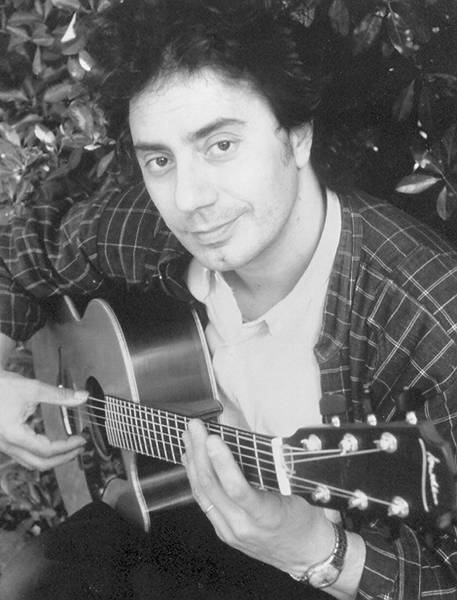
Pierre Bensusan
French-Algerian guitarist Pierre Bensusan is a unique and fascinating player. After cutting his teeth in bluegrass bands, he switched from mandolin to acoustic guitar, adopted the DADGAD modal tuning as his “standard” tuning, and began a long musical journey. Along the way, his dizzying technique and boundless musical scope have proven that almost anything that can be imagined can be played on the guitar.
After releasing a handful of albums on Rounder Records and Favored Nations in the late 70’s and into the 80’s, Bensusan set about purchasing back his master tapes, and started his own label, DADGAD Records. Now, to mark the 35th anniversary of his career in music, Bensusan is releasing a box set of his entire recorded output : Complete Works, 1975-2010.
…and what a body of work it is! Bensusan’s first few albums (the classic Pres De Paris, 2 and Musiques) found inspiration in the folk music of the British Isles and France, with the young Pierre steadily expanding on the instrumental innovations of Brit-folk revival giants like Martin Carthy and Davy Graham. Bensusan also proved himself an exceptional interpreter of Irish melodies, as evidenced in one of his most popular pieces, “Merrily Kissed The Quaker”. This track shows Bensusan’s agility on the instrument, effortlessly adding ornament in every voice of the chord, including the bassline.
As time went on, the sound that Bensusan developed drew from many sources… classical, folk, world, new-age and rock ideas were seamlessly fused together and played in his singular, elegant style. The guitarist began restlessly experimenting with both sonics and song structure, adding a variety of tone-altering effects to color the sound of his Lowden acoustic, as well as a phrase sampler so that passages could be looped, layered and improvised over. These techniques can be heard on the atmospheric Intuité and Altiplanos albums, as well as on Spices, which features Pierre bouncing ideas off of a group of world-jazz musicians.

Though the box is attractively designed, the price of the collection (99,90 Euros, roughly $150 USD) might be a little prohibitive. There is no new material on offer, and for the most part all of these albums are still available, with the few out-of-print titles coming up regularly on sites like Ebay. (UPDATE — according to DADGAD Records, the discs Wu-Wei and A la Carte both contain bonus tracks. Also worth noting, there will soon be a US manufactured box, which should retail for closer to $120 USD + shipping!) I think this package will appeal mostly to collectors, gift-givers with a guitarist in their lives, and perhaps those hoping to replace original vinyl records. Don’t let me discourage you, though… Pierre Bensusan’s music is an absolute treasure, and I highly recommend it to anybody who is interested in folk music, world music or the acoustic guitar. I’m frankly stunned that so many of the younger guitar players that I talk to these days have yet to discover Bensusan’s work. Hopefully that will start to change with the release of Complete Works and with the upcoming new documentary about Bensusan, entitled Strings Without Borders.
The feature-length film is being directed by Roger Sherman, of Florentine Films. The work is currently in production, and fans and supporters can donate to the project here. Donors who give in excess of $100 will be featured in the film’s closing credits. From the selected preview scenes featured below, it looks like it’s going to be a great documentary!
Vodpod videos no longer available.
When a release date is announced, I’m hoping to talk to both Pierre and Roger Sherman about the film. In the meantime, to learn even more about Pierre Bensusan, I highly recommend this interview, conducted by Todd Ellison. For guitarists, there is also The Guitar Book, Bensusan’s thoughtfully prepared printed collection of (challenging) sheet music, tablature, recipes, poetry and philosophies about life and music.
 WORK & WORRY